Beetroot juice has increasingly come into the spotlight of health and fitness experts due to its high nitrate content, which helps reduce blood pressure and improve endurance. The aim of this article is to examine in detail the effects of beetroot juice on the body, particularly among athletes. It will demonstrate how beetroot juice increases the blood's oxygen-carrying capacity and how it may contribute to improving sports performance.
The role and mechanism of action of nitrates
Beetroot juice is one of the richest sources of plant-based nitrates. Nitrates are converted into nitric oxide in the body, which dilates blood vessels and increases blood flow. This process plays an important role in regulating blood pressure and oxygen transport. The vasodilatory effect of nitric oxide aids blood flow to the muscles, increasing oxygen supply. As a result of these processes, blood pressure decreases, which can be beneficial for those prone to high blood pressure.
The vasodilatory effect brings additional benefits. Improved blood flow helps muscles recover faster after exercise, reduces fatigue, and increases endurance. This condition is particularly useful for athletes who want to train at high performance for longer periods.
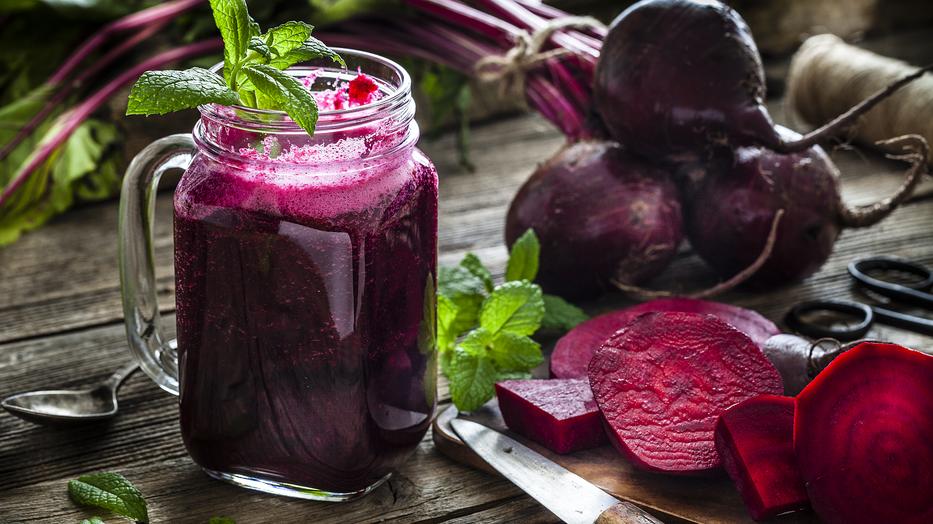
Beetroot juice in blood pressure regulation – a natural solution for high values
High blood pressure is one of the most common health problems today, especially in those over 40. Therefore, it is particularly important to support blood pressure regulation not only with medications but also with natural methods. Beetroot juice is one of the most well-known options.
Research suggests that the nitrate content of beetroot juice can reduce blood pressure through its vasodilatory effect – by an average of 3–10 mmHg. This degree is already clinically significant, especially when consumed over the long term. Regular consumption of beetroot juice can thus be effective not only in preventing cardiovascular diseases but also as a complementary support as part of a conscious lifestyle.
Beetroot juice and exercise: natural enhancement of endurance
In recent years, beetroot juice has also become popular among athletes, thanks to its ability to improve the body's oxygen utilization. This means that the body can function more efficiently even under higher loads. The nitric oxide produced from nitrates promotes the dilation of blood vessels, resulting in better blood flow – thus, the muscles receive more oxygen and can work intensely for longer periods.
According to research, regular consumption of beetroot juice can improve endurance by up to 16%, especially during cardio-type exercises such as running, swimming, or cycling. This is reflected not only in performance but also in the shortening of recovery time.
Pre-workout beet juice – when and how should it be consumed?
For the best effect, it is recommended to consume beet juice 1–2 hours before exercise. This gives the body time to convert the nitrates in it into nitrogen monoxide, which is responsible for the vasodilating and performance-enhancing effects.
Recommended amount: daily 250–500 ml of fresh or pressed beet juice. This depends on the intensity of the workout, individual sensitivity, and the current state of blood pressure. Those who are sensitive to fluctuations in blood sugar or blood pressure should be cautious.
Beet juice can be combined with other vegetables or fruits to taste, such as carrots, apples, lemon juice – this not only gives a more pleasant taste but also allows for the intake of other important nutrients.
The role of beet juice in an active lifestyle over 40
Especially over the age of 40, it is important that exercise and nutrition consciously align with each other. Several gyms in Budapest – such as the Chili Fitness network (e.g., Bikás park Chili Fitness, gym in Újbuda, Csepel Chili Fitness) – specifically support health-conscious, age-appropriate workouts, where recovery and cardiovascular protection are also in focus.
In this perspective, beet juice fits perfectly into the pre- or post-workout diet. Before exercise: it improves oxygen supply, enhances performance. After exercise: it aids circulation and faster recovery.
Whether you are attending personal training or participating in group classes, the right nutrient intake – for example, in the form of beet juice – can help you endure the workout better and recover faster.
Beet juice and recovery: support for all age groups
Post-exercise fatigue and muscle soreness are natural phenomena, especially if you are a beginner or over 40. Beet juice can help make these complaints milder – better circulation promotes the removal of waste products, healing of micro-injuries, and faster incorporation of nutrients.
If we combine beetroot juice with other regeneration techniques – such as stretching, SMR rolling, or restorative sleep – it significantly supports a healthy return to an active lifestyle.
Summary – why is it worth incorporating beetroot juice into the training program?
Natural blood pressure-lowering effect Performance enhancement through improved oxygen supply Reduced recovery time Easily and naturally integrated into daily nutrition Particularly useful over the age of 40 if the goal is healthy, sustainable training
Beetroot juice is not a miracle drink – but as part of a well-structured, regular training program and conscious lifestyle, it can provide strong support. If you take your health seriously, it may be worth trying the combination of beetroot juice and training, especially in Budapest gyms where expert background and age-appropriate programs are available.

 English
  Hungarian
  German