There is a question that almost everyone asks themselves before diving in. Is it worth it for me? I pay as much monthly as a restaurant dinner, and I'm not sure I go out every week. What if I stop after two months? What if I can do the same thing at home?
These are completely reasonable questions. The problem is that most people approach them from the wrong perspective. They see the monthly membership fee as an expense that needs justification, not as a decision that determines other things in the long run.
A 2017 study published in PLOS One showed that gym members significantly more often meet the recommended weekly physical activity guidelines than those who try to stay active without a membership. This is not a coincidence. The structured environment of the gym, the available equipment, and the simple fact that you pay for it all contribute to you actually going out.
This article is not about everyone getting a membership. It’s about understanding clearly what you actually get in return if you take development seriously. Because the number on the bill is just one part.
What does a gym membership actually include?
Many people think of their membership as a pass to access the machines. This is true, but it is the smallest part of the value.
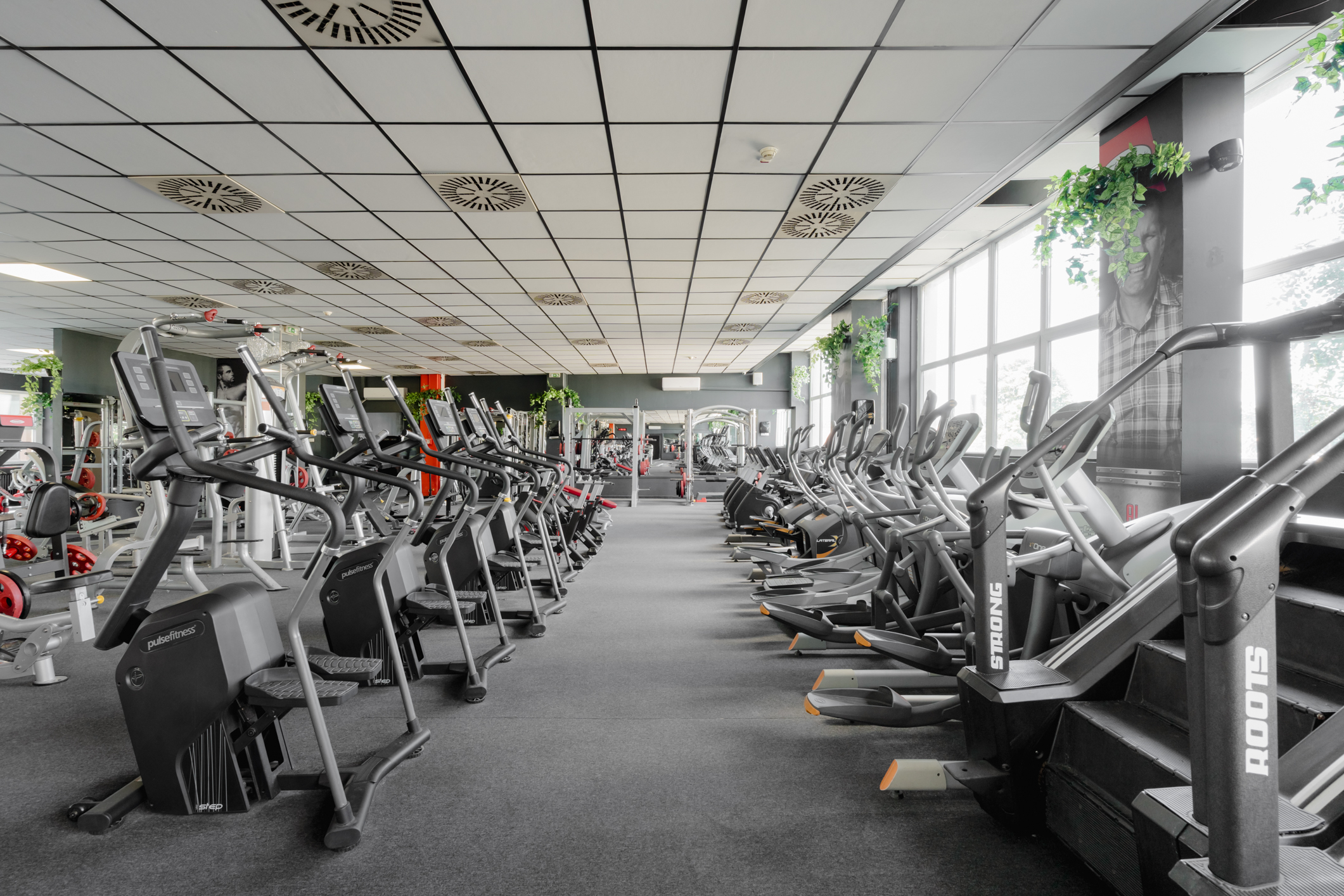
The first and most obvious: the equipment. In a well-equipped gym, you find free weights, strength machines, cardio machines, and a functional training area all at once, in one place. Reproducing the same at home is simply not realistic financially and spatially for most people. Variety is not a luxury but a basic requirement: a monotonous workout program will lead to a plateau sooner or later.
The second thing that many underestimate: professional presence. A personal trainer is not just for the „advanced.” For beginners, feedback on form is especially valuable because ingraining bad technique leads to a much longer road back than learning correctly the first time. A trainer can show you things in minutes that you would have spent hours searching for on YouTube.
The third is the convenience infrastructure. Locker rooms, showers, secure storage. Small things that actually matter a lot. If you need to go back to work after training or rush to pick up the kids, you don’t have to jump home to change. This is often the difference between „I'll go” and „I'll skip.”.
Real cost?
The monthly membership fee may seem high at first. But if you divide it by the number of workouts, the price per session is typically less than a medium lunch. Moreover, the calculation rarely stops here.
| Aspect | Home workout | Gym |
|---|---|---|
| Equipment | Limited, expensive to set up | Complete set of tools, immediately available |
| Focus and distractions | Phones, tasks, roommates | Dedicated space, minimal disruption |
| Professional feedback | None, or only from video | Personal trainer, live correction |
| Possibility of progression | Quickly reaches limits | Continuous progressive load |
| Habit building | Harder, many drop-off points | Structured routine, external accountability |
| Long-term sustainability | Many quit within 2-3 months | Members remain active for longer |
According to CDC data, regular physical activity reduces the risk of cardiovascular diseases, improves joint health, and helps with weight management. When viewed as a health investment prior to a gym membership, the equation changes quickly. A missed medical treatment, faster rehabilitation from an injury, a year of better sleep, these are all measurable differences, just not reflected in the monthly fee.
Why is training in the gym more effective than at home?
It's not that you can't train at home. You can. But there are some structural differences that make the gym yield better results for most people, and sooner.
The first is the absence of distractions. At home, the phone rings during the workout, you need to load the washing machine, someone calls out, something comes to mind. The gym physically separates you from your daily routine. You walk in, and from then on, it's your time. This is not a subjective feeling, but a measurable difference in concentration and workout effectiveness.
The second is the breadth of equipment. Machines, free weights, cable machines, cardio stations, all available at once, immediately. If one machine is occupied, there is an alternative. If you want to change the program, you don't have to procrastinate because you don't have the equipment.
The third, and perhaps most important: the personal trainer. Not everyone works with a trainer, but their availability is valuable in itself. If a movement is not clear, there is someone to show you. If you're at a plateau, there is someone who can see from the outside what needs to change. This is the kind of feedback that cannot be obtained from YouTube videos or apps.
The membership is truly worthwhile if the location is also right
Research shows that people exercise significantly less often if the gym is far from their daily routes. 1. Chili Fitness Budapest is present in four locations in the city, precisely so that there is always one that fits into your route. 2. You don't need to organize a special day for the workout. If the location is close to work or home, the workout simply integrates into the day. This is one of the strongest guarantees for long-term consistency.
3. The mental effect 4. The physical return of visiting the gym is obvious. But the mental effect is what surprises many and is why many do not stop, even when the original goal has long been achieved.
5. Regular physical activity affects endorphin production, which is directly related to mood and stress management. But this is just one part. The gym is the point in the day where you disconnect from screens, your to-do lists, and emails. An hour that is all about you. Not about your boss, not about deadlines, but about how much you can lift now and how your breathing is going.
6. This mental reset effect lasts for days. Studies consistently show that regular exercisers report better sleep quality, which further improves focus and energy levels for the next day.
7. And there is something that cannot be measured directly, but everyone feels it: the feeling when you perform a movement differently than three months ago. When a weight feels lighter than it did. This confidence does not just stay in the gym.
8. How to get the most out of your membership?.
9. The first step is the location. Choose a gym that realistically fits into your daily routes. Not the ideal location, but the one you will actually go to. Then go check it out during your usual workout time. Because the atmosphere and the traffic you will encounter then will matter.
10. The second step is the goal. Before you start, decide what you want. You don't need a grand plan, but have something specific. "I want to be stronger in my upper body" is enough for a trainer to tailor a program for you.
11. The third step is consistency. This is easier if you have a fixed time every week. Not "when I have time," but "Tuesday and Thursday evenings, exactly." A habit is a habit because it is repeated under the same conditions. If the gym fits into your route and the time is stable, everything else builds around it.
12. Finally, use the available professional knowledge. A personal trainer is not just a luxury. A few sessions of consultation at the beginning will show you where to start, what to pay attention to, and how to progress safely. This is very difficult to reproduce alone at home.
13. Not an expense.
14. An investment.
15. The time and money invested in your health do not go to waste. It returns in better sleep, more energy, less stress, and in the feeling that your body does what you want it to do. 16. With its four locations, it is where you are. With professional equipment, experienced trainers, and an atmosphere where progress is not a coincidence but a system.
17. Home workout vs. gym comparison Chili Fitness Budapest With four locations, it is where you are. With professional equipment, experienced trainers, and an atmosphere where progress is not a coincidence, but a system.
CHECK OUT THE GYM
 English
  Hungarian
  German